Why Apple Stands Out
Artwork by Celestial Creations
Walk into an electronics store, and you'll find dozens of smartphones.
Many have similar cameras.
Comparable processors.
Nearly identical features.
Yet Apple consistently occupies a unique position in the market because it understands something many brands overlook:
People don't choose brands based on products alone. They choose them based on perception.
That perception is carefully crafted through strategy, design, and consistency.
Let's take a closer look.
Apple Sells an Identity, Not Just Products
One of Apple's greatest strengths is positioning.
Apple rarely markets itself as a technology company.
Instead, it positions itself as a company that empowers creativity, innovation, and simplicity.
Its advertisements don't focus primarily on processors or RAM.
Instead, they show people creating films.
Taking photographs, making music, and connecting with loved ones.
The product becomes part of someone's lifestyle, not just another piece of technology, which makes the connection with their audience much deeper.
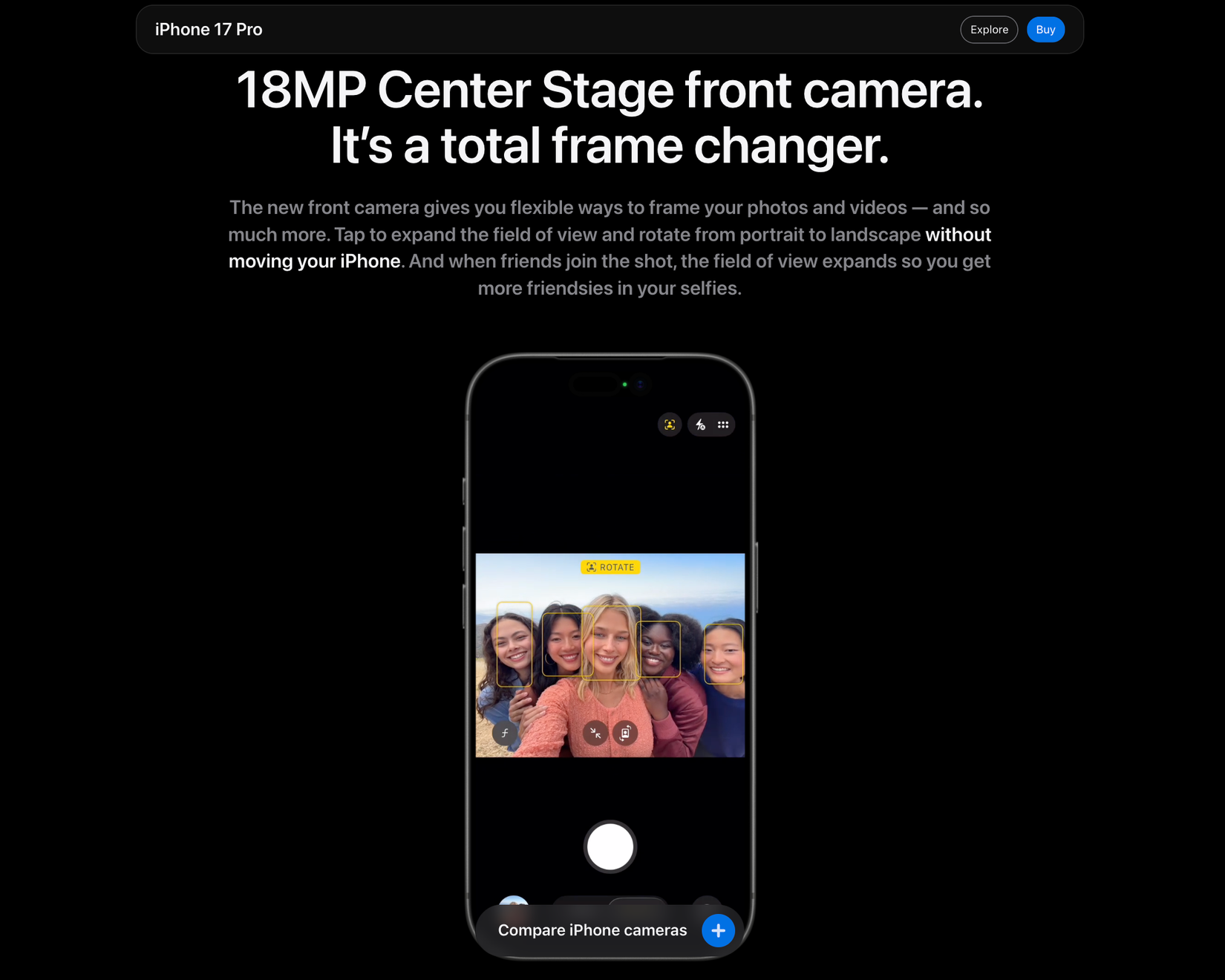
The viewer can clearly see the value of the brand by understanding how it improves their life.
Compare that to many competitors.
Samsung often highlights display technology, AI features, battery life, and hardware innovations.
Google emphasizes artificial intelligence and software capabilities.
These are valuable selling points, but they appeal primarily to logic.
Apple begins with emotion.
Technology becomes the tool, not the headline.
Simplicity Creates Confidence
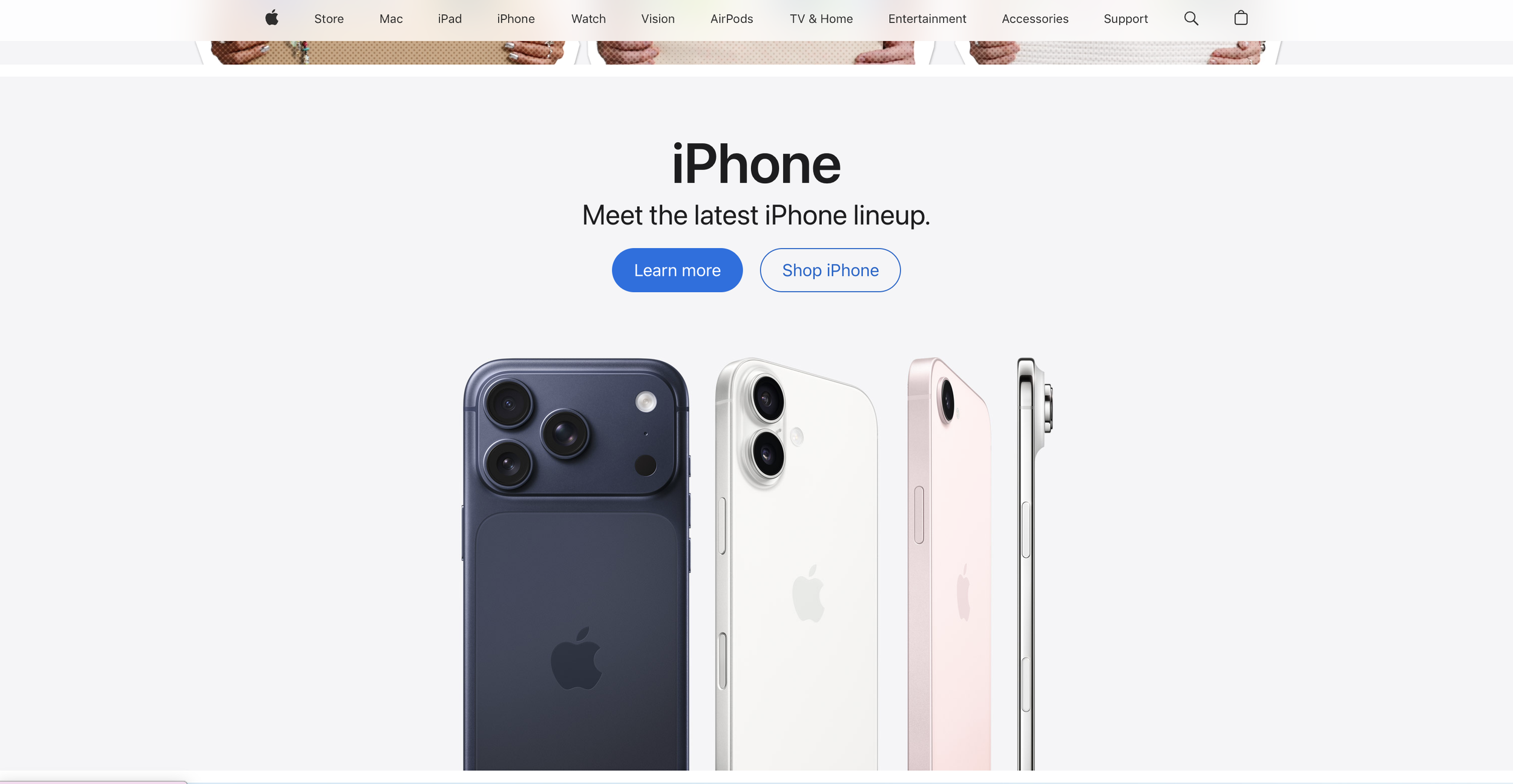
Visit Apple's homepage, and you'll notice something surprising.
There isn't an overwhelming amount of information.
Instead, you'll find:
Large product imagery
Short, confident headlines
Plenty of whitespace
Clear calls to action
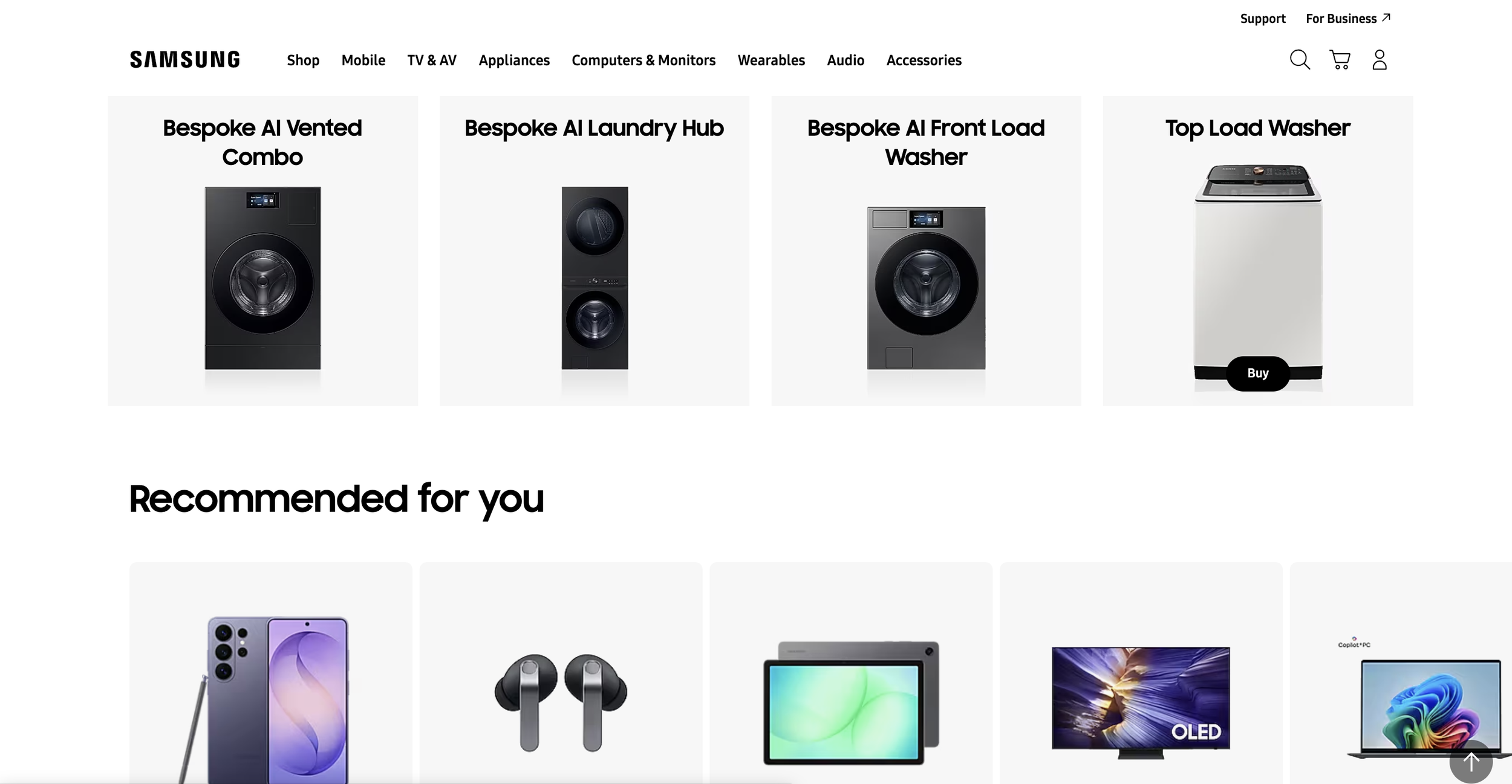
Now compare that to Samsung's website.
Samsung often showcases a broader range of products, promotions, and purchasing options across a single page.
Neither approach is inherently wrong.
Samsung's strategy reflects the breadth of its product ecosystem.
Apple's strategy reflects focus.
By presenting fewer choices, Apple reduces cognitive load.
Customers spend less time figuring out where to look and more time engaging with the story Apple wants to tell.
Apple is, in my opinion, one of the pioneers of the minimalist design trend we see today, and they're still going strong.
Sometimes, less really is more.
Every Touchpoint Speaks the Same Language
One of the reasons Apple feels so recognizable is consistency.
As soon as you see that sleek white box with simple typography and a futuristic feel, you know it's Apple.
It's not because the logo or designs are memorable.
It's the fact that they reinforce the same design across all touchpoints that makes it hard to forget.
When you see a design associated with a brand name or product enough times, your brain begins to form connections.
Whether you're:
Browsing the website.
Walking into an Apple Store.
Unlocking an iPhone.
Or reading product packaging.
Everything feels unmistakably Apple.
The typography is consistent.
The photography is consistent.
The tone of voice is consistent.
Even the retail experience reinforces the same values of simplicity, accessibility, and thoughtful design.
This consistency creates familiarity, and familiarity builds trust.
Many businesses invest heavily in a logo while overlooking everything else. Apple demonstrates that a brand is far more than a visual mark.
It's the complete experience.
The Power of an Ecosystem
Let's step away from visual identity for a moment and talk about their products. Perhaps Apple's greatest strategic advantage isn't any single product.
It's the ecosystem.
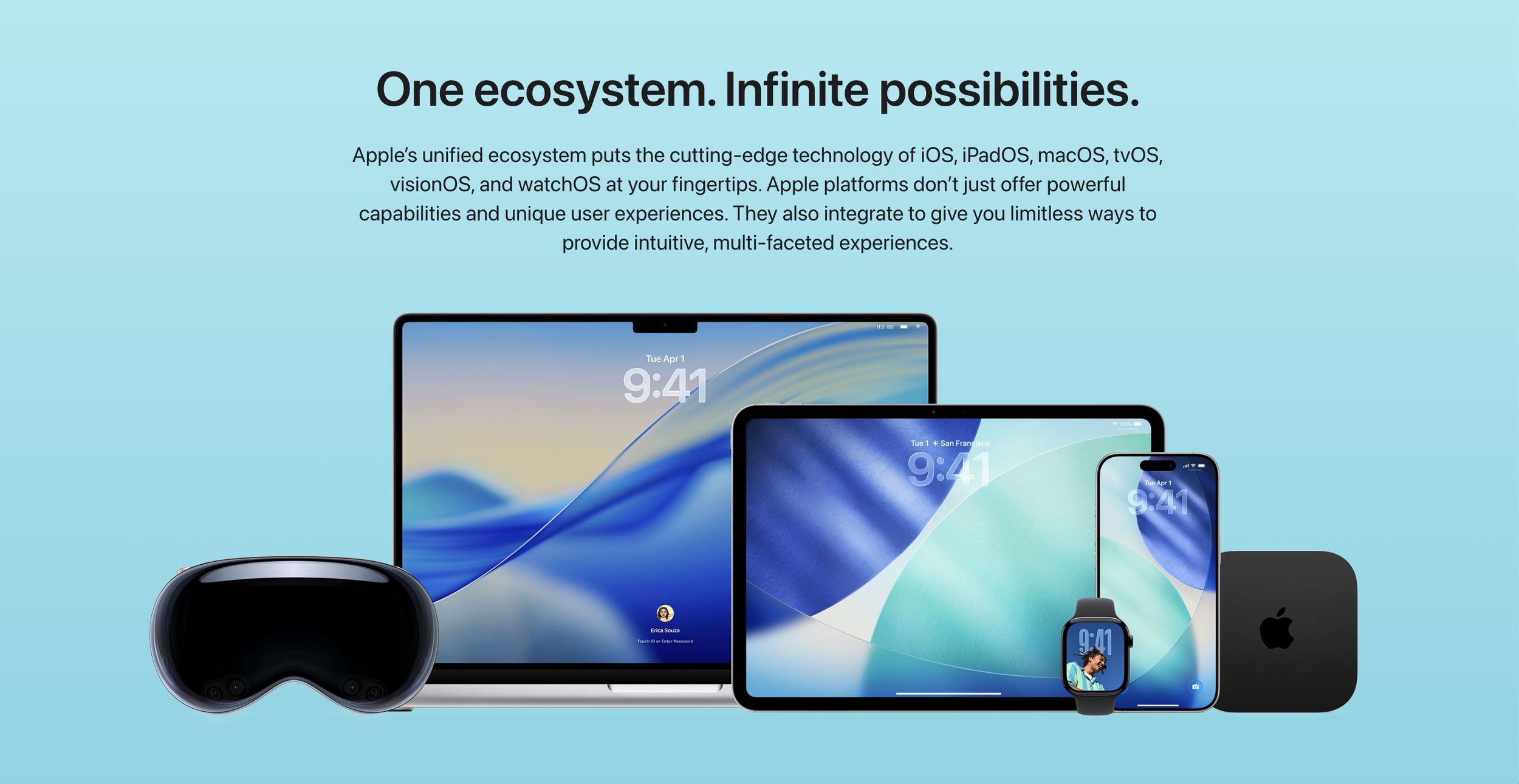
An iPhone works seamlessly with a Mac.
A Mac works seamlessly with an Apple Watch.
AirPods connect effortlessly across devices.
Photos and notes sync automatically to iCloud.
Messages continue across platforms.
Each product increases the value of the others.
Instead of selling individual devices, Apple has created an interconnected experience.
For many customers, switching brands means leaving that experience behind.
That's incredibly powerful positioning.
What Small Businesses Can Learn
Most small businesses don't have Apple's budget, and they don't need it. The lesson isn't to copy Apple's minimalist aesthetic.
You don't need a certain aesthetic to be successful.
It's to understand the thinking behind it.
Ask yourself:
Does my brand have a clear position?
Does every touchpoint tell the same story?
Am I overwhelming customers with too many choices?
Does my design guide attention or compete for it?
Am I selling features, or am I communicating value?
These are strategic questions.
The design simply brings those answers to life.
Great Design Begins With Great Strategy
Apple's success isn't the result of one beautiful logo or one memorable advertisement.
It's the result of thousands of intentional decisions working together.
Clear positioning.
Consistent branding.
Thoughtful product design.
A seamless customer experience.
Every element reinforces the same promise.
Design isn't just about making something look beautiful.
It's about translating strategy into an experience people can recognize, trust, and remember, because the brands that stand out aren't always the ones making the most noise.
They're the ones communicating with the greatest clarity.
Ready to build a brand that stands out?
The Celestial Blueprint is my signature 1:1 creative development experience designed to help founders and visionaries build their brand, product, platform, and launch with clarity, strategy, and intention.
Book your free Celestial Blueprint consultation to discover how intentional strategy can transform your brand into something people recognize, trust, and remember.
